It’s like if Ford had decided to market Pintos as fun, rolling campfire experiences.
 on LinkedIn discusses transitioning from deterministic to stochastic work tools like ChatGPT, highlighting the need for a mindset shift.](https://cdn.uploads.micro.blog/275515/2026/b29b36b670.jpg)
It’s like if Ford had decided to market Pintos as fun, rolling campfire experiences.
Huh. Well, that trailer that got vandalized in a fenced, secure lot got picked up on our security camera going by our house this afternoon. We saw it trying to see who emptied out our Little Free Library, which is also a thing people do.
A few episodes into Black Rabbit, it is doing two things I do not like about almost any contemporary tv drama:
First, it is doing the moralizing thing. We’re introduced to a character whose natural place in the narrative would traditionally have involved bringing them into the action a bit later. But the writers felt the need to insert a beat where they don’t do much but position him on a moral spectrum so we can know how to read him later, where he’d have been a more ambiguous character. Once upon a time, sussing out this sort of character was part of the fun; now we appear to need to be told he’s “bad” for a set of reasons that are orthogonal to his organic place in the story, so that when he naturally enters, we know how to read his behavior and motivations because we’ve already been told he’s bad.
I think this is part “spirit of the times.” There’s a little reaction to the troubled white male antihero trope, and there’s a little bit of plain old moralism under new rules. Everybody thinks they’re better than old ’50s and ’60s morality plays, but we’re not: There was a brief window where moralizing wasn’t cool, but that window has closed and mass-marketed entertainments understand they’d better make their Position on Matters clear. It’s a source of some family discord right now, in that two of us are having allergic reactions to the moralizing even if our values are aligned with the moralizer, and the third doesn’t understand how agreeing with someone while feeling condescended to by them can be a thing.
Another part of it is related to my second issue with Black Rabbit, which is that you can sense the way modern t.v. writers are reacting to binge streaming and competing with phones for attention:
The old saw about stage actors moving to screen was that they had to learn how to pull in a broad style of stage acting keyed to the physical characteristics of the performance space, and become more understated for screen.
Now writers are learning they have to be more overstated and broad, because they know people are only half watching, and for plot-driven narratives probably barely watching until whatever is happening on the screen gets loud enough to get them to look up. Just go read an average recap to understand how little of 50 minutes of a screenplay is even registering with people paid to watch.
One way that broadness plays out is uneven pacing in the takes. Sometimes a scene goes on a little long, or a reaction is held a few beats over its natural length, apparently to make sure it lands.
I just got through The Task and it did that several times. A director who trusted the actor, script, and audience wouldn’t hold some of those takes that long or make such a point to keep the camera on a reaction. Writers and editors are dealing with an audience that is both six feet away from “the stage,” but psychically up in the third row of the balcony.
It’s weird, because Black Rabbit screen editing is paced like any other fast-cutting t.v. thing in the 21st century, but there’s this weird sense of friction or slowness at key moments when it briefly feathers the brakes to make sure the reaction landed. It’s like start and stop rush hour traffic, but for your brain.
I feel weird even writing about television because it suggests I spend a lot of time on it. I really don’t relative to any national average I’ve read about recently, but I think that’s made me more sensitive to modern norms: I used to watch a lot more television and notice the difference.
No, my dude, I am not “tired of entering passwords.” Entering passwords has been solved securely and effectively and I no longer think twice about it. What I am tired of is waiting for the magic link to arrive, and I am super sick of the havoc that wreaks trying to just do a simple Oauth grant. 😤
LocalGPT is a little oddly named, to the extent the “local” part is something you can aspire to if the hardware economics of a local LLM make sense to you. But the interesting part is more that it’s very “OpenClaw lite.” Still has the run of the platter, etc. but it’s a single Rust binary and feels a bit less sprawling. It also has a little less personality out of the box, and it feels snappier.
Comes with a built-in CLI chat interface, a built-in webserver on localhost for web-based chat, and there’s a Telegram interface that hasn’t been attached to a tag yet.
Curiously, it is also less, erm, “aware” of its own existence as a mediating layer between it and whatever LLM it is connected to. OpenClaw handles questions about itself with operating information that it is OpenClaw you are talking to. LocalGPT periodically answers questions directed to “you” in Claude Code’s voice.
I like that, by virtue of running it through the Claude Code CLI, it has access to all the tools Claude Code has: Any cloud MCPs and skills pass through to LocalGPT, so it shares basic-memory with any other LLM talking to that MCP along with its own memory layer (which is fast and transparent).
It is far less likely to induce the kinds of quasi-religious experiences OpenClaw was inducing because it feels more stripped down and the seams show more. That makes it a way better experimental tool to me. There’s less complexity, it’s more transparent, it’s lighter weight, and it’s less aggressive. At the same time, it borrows some of the patterns that make OpenClaw more useful out-of-the-box than the kinds of Jarvises you see people cobbling together.
As with all these things, it is reflective of the discipline that produced it, so I have to steer it toward my “humanist manager” use cases more. But the transparency, speed, and simplicity mean a little less “what on earth is going on in there” and a little more “if I’m not sure, there’s a limited set of Markdown files this thing is using to ‘know’ stuff, so I can introspect and nudge.”
I fed it a bunch of blog posts about management and work, along with a couple of skills assessments, and it has become a good planning aid because it nudges me to remember the things that matter to me during a time when it’d be way easier to embrace my inner asshole.
One of the weird paradoxes of corporate life, when I think back to my time in an airborne unit, is that culturally, as a paratrooper, I understood every directive or plan to be subject to my own situational awareness. I show up at work with a presumption that I have room to judge, apply creative thinking to directives, and think in terms of accomplishing “commander’s intent,” not “stick to the plan even if it means the commander’s intent won’t be realized.”
Corporate leaders who know my biography have said things like, “compared to normal startup people your background probably means you understand the importance of strict control and compliance.”
No, my background means that I operated in a culture where we were given careful plans for operations, but focused on what the plans were for and how any one of us might, at any given moment, end up needing to toss the plan to accomplish the mission.
And that wasn’t just paratrooping. My first assignment out of jump school was a conventional signal unit in South Korea, providing FM retransmission over the southern half of the peninsula. Things were always going wrong, and it was always left to teams of three or four operating in isolation on a series of mountaintops to “adapt and overcome,” regardless of the original plan or what the field manual said. My very first radio watch in the field, something went wrong, I reached for the troubleshooting flow chart, and my team lead sighed, and said, “that’s going to take an hour. Forget what those instructors said. Use your common sense. What do you think is wrong? Fix that.”
Micromanagement, strict alignment, and deep discomfort with creative interpretation and execution are way more common in the businesses I’ve worked in than they ever were in either a conventional Signal platoon, or an airborne unit.
The challenge for me, as a leader in a corporation, has been to understand I have that formative experience and am just stubborn and naive enough to believe it was a good operating model that left me feeling empowered even if I had to keep my uniform pressed and hair short. Out in the civilian world, not everyone had that experience and often will interpret “here’s a rough plan, improvise as needed” as “execute in this manner, don’t deviate.” Or rather, it’s a mindset that appears at some frequency above “uncommon.”
In that retransmission platoon, and in that airborne unit, we all knew better than to think like that. We knew we needed to just get the shot and keep comms flowing.
On a more prosaic life note: “Get up at 5 a.m. and conquer” is basically a suicide pact for me; but “get up at 6, do little with a screen, get around to breakfast at 7, organize your day by 8” is pretty mellow and sustainable.
I started to write about OpenClaw and got as far as “the story so far on my past attempts to do some of what this is packaging up” before realizing there’s a certain kind of writing about tech that borders on making someone spend brunch listening to a meticulous retelling of last night’s stress dream. Since this blog is as much about me jotting down a few things for future reference as it is the benefit of others, I’m glad I stopped typing so I can just drop in a limited observation:
“The Gap Through Which We Praise the Machine” remains the best expression of what I keep learning with each wave of “no, it’s different this time” with this stuff: OpenClaw addresses things I was trying to cobble together for myself in a coherent, intelligent, useful way that I personally do not have the wherewithal to build for myself; but the underlying tech on which it is built still requires scaffolding, kludges, and computationally expensive workarounds, and you still end up having to do work to get it to work.
It is a definite step forward. It’s a proof of concept that is a few steps closer to what I think a lot of us imagine when we talk about the possibilities of agentic AI. I really appreciate that it is a bit more proactive in its way around proposing and implementing tools that reduce the burden on me to craft hyper-specific prompts or continuously redirect it. But you’re still doing work to get it to work.
The religious rapture with which it is being greeted is not a comment on the technology. It is a comment on the narcissism the tech industry is goading us all into with these things.
My OpenClaw instance is operating in a personal Slack account, btw. I have a few channels set up where it provides slightly different kinds of assistance depending on context and the kind of help I need. I picked Slack because the integration picture is good with several tools I use. If OpenClaw can’t solve a problem with a tool it made, or if I need to make a quick update to state on a given piece of information, it’s a /command away with the appropriate integration. As I get ready to start a bake-off on agentic AI tools at work, this is helpful validation for a few ideas I have about where Slack fits into it all.
I gave Chrome’s new “run the browser with Gemini” feature a try with a pretty mundane task: Starting from my Amazon Kindle account, find and remove the samples from my library of 400+ Kindle documents.
It was an exercise in utter misery. Amazingly bad. I made it stop after watching it “think” for two minutes just to ask me four times before it would remove the first sample, at which point it said “well, this is a bad website so it’s understandable this was not a good idea.”
I mean, who knows what Amazon’s web team has done in its quest to thwart a few common workflows people use to automate Kindle management (and de-DRMing). It probably had a point.
“Let’s see in a year!”
Our camper got broken into. Filing a report I forgot the plate #, so I typed “camper” into Apple Photos search, found a picture with the plate & copied the text-recognized #. It took less than 10 seconds from “search” to “paste into the report” from 43k photos.
Ben

Eugene

Say whatever about my priorities and inner life, I’m not emotionally invested in iOS’s 90-day uptake numbers.
A software eng got sniffy with me for verifying how an app works. “I’d expect IT to know already.”
Sure, dude. What IT knows is that we have to use software made by people like you, which means we leave a lot of room for nothing to work like you tell us it will. Forgive me for doublechecking.
Nice Saturday: Breakfast downtown, an experiment with a new barber that paid off, and a hike up to Pittock Mansion (with some ice patches we weren’t expecting). I like my old barber, but I’m not the kind of work he wants to do. The new one received me with a welcome mix of warmth and pragmatism.




The World Is Drowning in Tourists. Who Should Pay the Price?
The benefit of traveling with another introvert is that you can round a corner with them, realize neither of you are going to like this situation, utter a low growl, and go somewhere people are not. I suppose you miss the opportunity to recreate postcard photos, but you also get to just see the place a little more as it is lived in, not traveled.




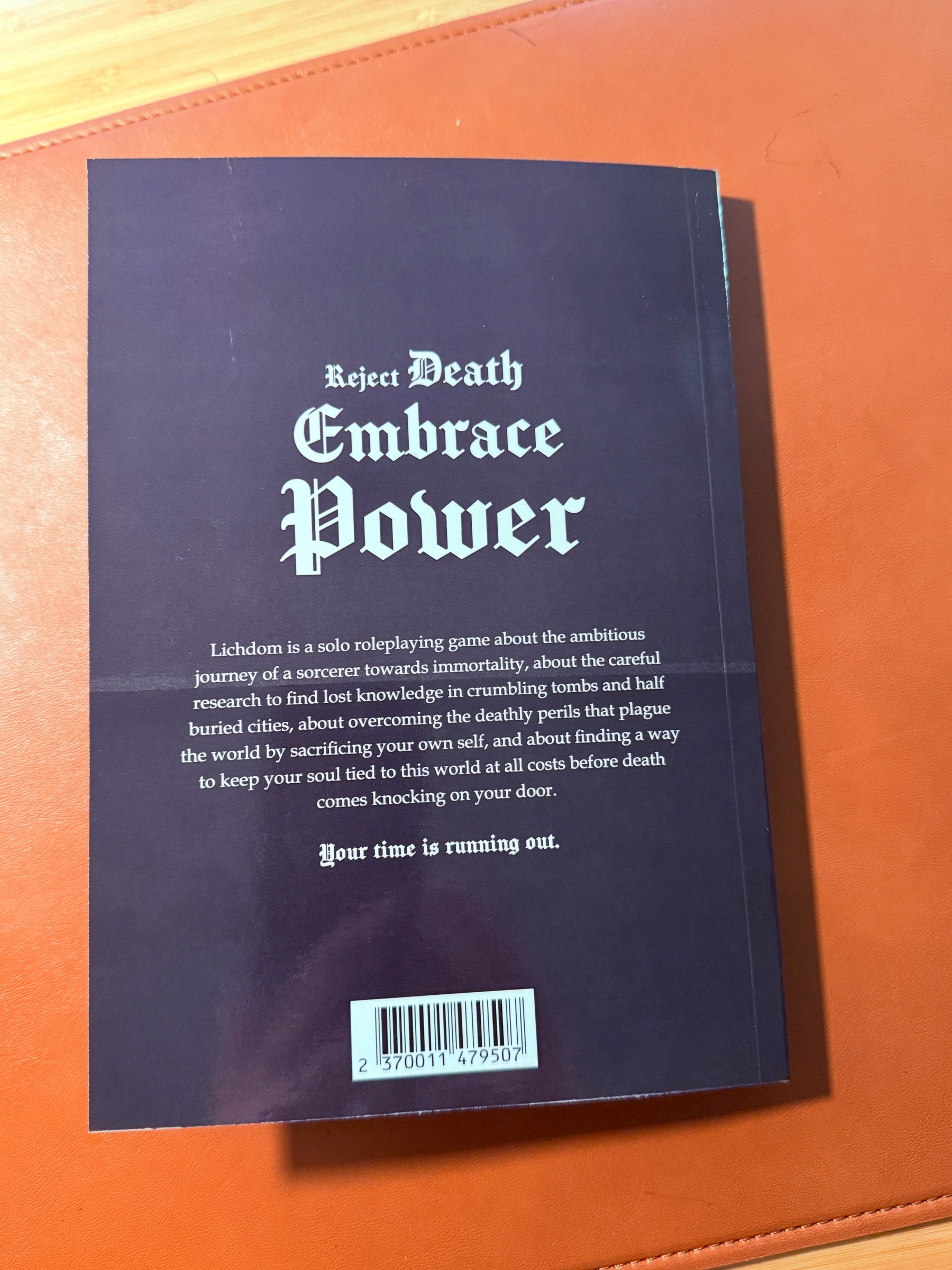
I’ve never done a solo RPG before. I’m not sure how I found this one, but it looks fun and it’ll be an excuse to do some writing that isn’t a series of Slack messages pestering people about software licenses.
I’ll be the first to admit that, as an editor, I was a relative dirtbag. I mean, I cared about what I was editing. I shared what little I knew about writing from writers who wanted to learn from me, but my core diagnostic tool came down to clarity. Most of my feedback over the years came down to “I think you painted yourself into a corner here. Either you aren’t sure of yourself and you’re trying to talk your way out of it, or you just got in a hurry. How does this work, instead?”
What else besides that?
I think a lot of it came down to a fraught relationship to writing: Some middle school diagnostic administered by the state of Indiana declared me a mediocre fifth-grader in writing aptitude. What did I know? The test said so.
I self-selected into the remedial composition course when I got to college. A week later the prof said, “I don’t know what you’re doing in here. Did someone tell you that you had to take this course?”
“No, I’m just a bad writer.”
“Well, you’re actually a good writer. You can stay if you want. You can help the people who are struggling. My husband’s the school paper advisor and I think you should go talk to him.”
It kind of came down to “what did I know” all over again, just with a message it was nicer to hear. I did go visit her husband, and he did give me a column, and I won a few college newspaper awards for my columns. I liked it enough that I dropped out my senior year because I just wanted to go work at a newspaper.
I wouldn’t say I applied myself to writing. I was thin-skinned and fragile about feedback because the coaching I got amounted to “you’re actually good at this, just trust your instincts and write.” Much later on, dealing with new writers, I realized how much I felt my quality as a writer was externally conferred and hence vaguely magical or spiritual … a thing that was conferred upon me by some authority and that could be taken away or disproven by some other authority.
So my sense of myself as a writer wasn’t really bound up in any personal grounding in “what is good writing.” I didn’t think about it much. A friend who was editing my work said in a state of mild exasperation, “writing is something I know how to do, and I’m good at it, but you have to do it.”
I had to do it, and I was always waiting for someone to say I was no good after all.
So when I started doing more editing work, I felt like an imposter with a bag of small tricks I’d learned at the feet of a very angry regional editor at a small midwestern newspaper chain whose first guidance to me was “quit reading philosophy and read only Hemingway until I tell you to stop,” and whose next piece of feedback after that was “keep up with the Hemingway.” Or it might have been him faxing a copy of a story back to me with the word “NO” written through the second paragraph.
Anyhow, as an imposter editor who remembered very acutely what it felt like to be “good” at something I didn’t personally understand, it was important to me to encourage new writers to just pay attention, learn a few ideas about how to be clear even if you can’t Write Amazing Sentences, and otherwise just believe that if they were clear thinkers and knew what they were talking about, they’d probably be fine.
I say that with a little shame, because I have known so many stellar editors. People who had, as I once explained to someone who didn’t believe there could be a principal-level writer, “advanced degrees in this shit, dude.” People to whom good writing was science, vocation, and passion. Leading a tech writing team? Jesus Christ. I had no place. But I did love that period on a marketing team where I drove an internal contributor program, because I could just tell these bright, thoughtful people, “write about what you know. It’s interesting. I can tell you’re thinking clearly, so you’ll probably write clearly.” And I took joy in running into them in the hall and saying “oh, that blog post did a few thousand views! Top post of the quarter so far!”
The tech writers, on the other hand, tolerated me with good grace. That was a good team and a good time.
Anyhow, I suppose my last point on all this, what inspired me to start typing, is that I saw yet another post about em dashes and AI, and how this person was with immense regret no longer going to use em dashes because they’re the mark of an LLM. Reading that kind of post, of which there are many, makes me feel sad for good writers who feel pressured to drop a tool from their self expression toolkit for fear of stigma. And it makes me angry at people who go around calling out em dashes, because it combines the worst elements of phrenology and witch trials, then wraps it all in social media histrionics.
For what it’s worth, and speaking as a former dirtbag editor with little useful knowledge of what makes writing good, I will say that Wikipedia’s guide to signs of AI writing is interesting and educational. It puts names on things I’ve felt but couldn’t name (“negative parallelisms,” for one) and is much more useful for critical reading conducted with the intent of catching a bot.
Short Sands Beach (Oswalt West)




Manzanita




Cannon Beach on the way to Manzanita




Cannon Beach on the way to Manzanita




I’m up to 28 active days on Gemini at work in the past 28 days, so ✅ for me on that. That is up from 8 active days the prior 28-day period, not because I wasn’t “using AI,” but because I didn’t care to use Gemini. Anyhow, I set out on a concerted effort to figure out Gemini in particular, and that led to me learning a lot more about Google Workspace in general.
I’ve never felt in sync with Google’s whole ecosystem. I have a lot of appreciation for GMail as a standalone product. I’m so used to Google Calendar at this point that I’m resistant to anything that doesn’t act like it, but I don’t really calendar my personal life. I tolerate Drive, hate Slides, get along with Docs, and have developed a grudging respect for Sheets. Meet has gotten better over the years. Tasks is super simplistic and its apps are bad, but I’m going to get back to it. Keep – I’ve never stuck with it.
But being under a mandate to use AI in prescribed tools, I sat down to a Gemini prompt and started poking around. You can give Gemini the run of your Google Workspace stuff with one configuration switch. So I enabled that and started playing. As with anything like this, I started with the calendar because I’m in that more than any other app during the day.
The integration with Workspace apps is faster than any MCP that offers the same integration via Gemini CLI. It’s quick to tell you what your day looks like, and Gemini tries to be helpful with interpretation, looking out for opportunities to optimize or figure out when the best work might be squeezed in between events. I put together a custom Gem named “Hecubus” that helps with day and week planning. I can’t see myself using it regularly (though I might if Gemini on the desktop had a live mode that allowed me to dialogue with it as I poke at emails and invitations and skim documents).
And calendar wrangling … I dunno. It’s a natural use case, and there are a million AI apps to help with that now, but I think they probably work better with less dense calendars. Given some up-front work to provide Gemini with more context about my priorities I might eventually leverage it more to help with a hectic week, but it’s just easier at this point to work it out myself. That one year I had an EA was pretty nice.
Keep ended up being more interesting than I expected. I’ve known a few Keep adherents, but I could never get past the way it presents like Post-It notes — which are finite things — but allows them to be bottomless. The thing is, Gemini understands them and can search them quickly, so they’ve got a potentially powerful place in the ecosystem as little nuggets of context you can farm. I experimented with hijacking Basic Memory’s knowledge format and Gemini did an okay job understanding “relationships” and “observations.” Gemini also responds well to just being told a fact about something you have a note about in Keep and adding it without needing an exact title.
In terms of personal organization, the mind-meld between Gemini and Keep is promising in a way that Apple is not managing with Siri and Notes. For instance, Gemini in Live mode responded perfectly (and predictably) when I’d put a bottle of wine in front of the camera and say “add this to my wine list, I got it at Bread and Roses” perfectly transcribing the label and adding it to the right list. Likewise, it ingested a bunch of products I showed it, and then knew how to respond to spoken queries about which beard shampoo is in my products list. Next time I’m at Bread and Roses, I’ll experiment with a Live Mode query to tell me which wines I can pick up there.
Years and years ago I had an Emacs extension called “remembrance agent.” Its whole schtick was that it would vectorize your documents then hang around monitoring a small context window around the point in the current buffer, suggesting a list of related documents you could jump to. I always liked the very ambient way that worked. I’ve struggled a lot more with systems that are about deliberate maintenance of a taxonomy — I’ve struggled with systems in general — but I can totally live with my main Keep window being generally clear of non-archived notes, and just quietly hucking bits of data into Keep’s weird little tesseract Post-Its, where they just go live in the Gemini Overmind as knowledge loam. I’m not trying to write 70 books here, I’m just trying to remember where I bought that one good beard balm, and which scent it was, or what the dimensions of all the windows in the house are.
While I was trying to learn more about how Google Workspace hangs together I came across this productivity guy/ex-Googler who is all in on Google stuff and built a “Capture, Organize, Review, Engage” workflow using Tasks and Keep. He gave me the idea to keep the Keep “desktop” fairly clean, and he also drew all the connections between Tasks and everything else in the Google Workspace ecosystem. There are hooks between Tasks and Mail, Docs, and Keep that are super useful. If you’re in that stuff all day, the case to not move to Tasks is a hard one to make because every Task you add from those tools includes a link back to the originating tool for instant recall of the context. (Gemini also labels Keep notes it creates with a little Gemini icon that takes you back to the chat session it came from.)
Anyhow, that all has less to do with Gemini and more to do with Google’s integration game, which is stronger than I realized a month ago. But Gemini is able to leverage or access all of it quickly and effectively.
The net effect of the past 28 days has been that I have largely migrated to Tasks for day-to-day work organization. It is the simplest todo system I can imagine outside Markdown checklists in terms of its up-front functionality and curb appeal, but it is omnipresent in my tools, and its simplicity is a real strength: Less systeming, more capturing, but the capturing is to concrete things, not abstract ideas that never get turned into an action or an outcome. The thing it doesn’t do well is maintain focus on projects, but I’m getting great support from the ops team at work to use Jira more consistently and effectively. Anything that ascends to the level of an epic starts generating messages about things assigned to me, and they get turned into Tasks that link back to the thing that generated the message.
Personally, it is much more useful to me to have all this stuff under one roof. I have my individual beefs with each component, but the integration is too good to ignore.
On the AI front, in my ideal world I would probably be happier using Claude with faster MCPs. Gemini itself is good, but Claude Desktop and Web are better, and Claude knows how to use MCPs, which makes it more versatile. But Gemini’s deep interlock with all these daily tools makes it easy to get over in a work context.
The place we got for the coast this weekend looked familiar. Had to go back to 2008 to figure it out.

Holy cow. My RPG info cup runneth over.
Giving Shadowdark a serious look. Looks light and simplified but thoughtful.