On the Fujifilm X half
#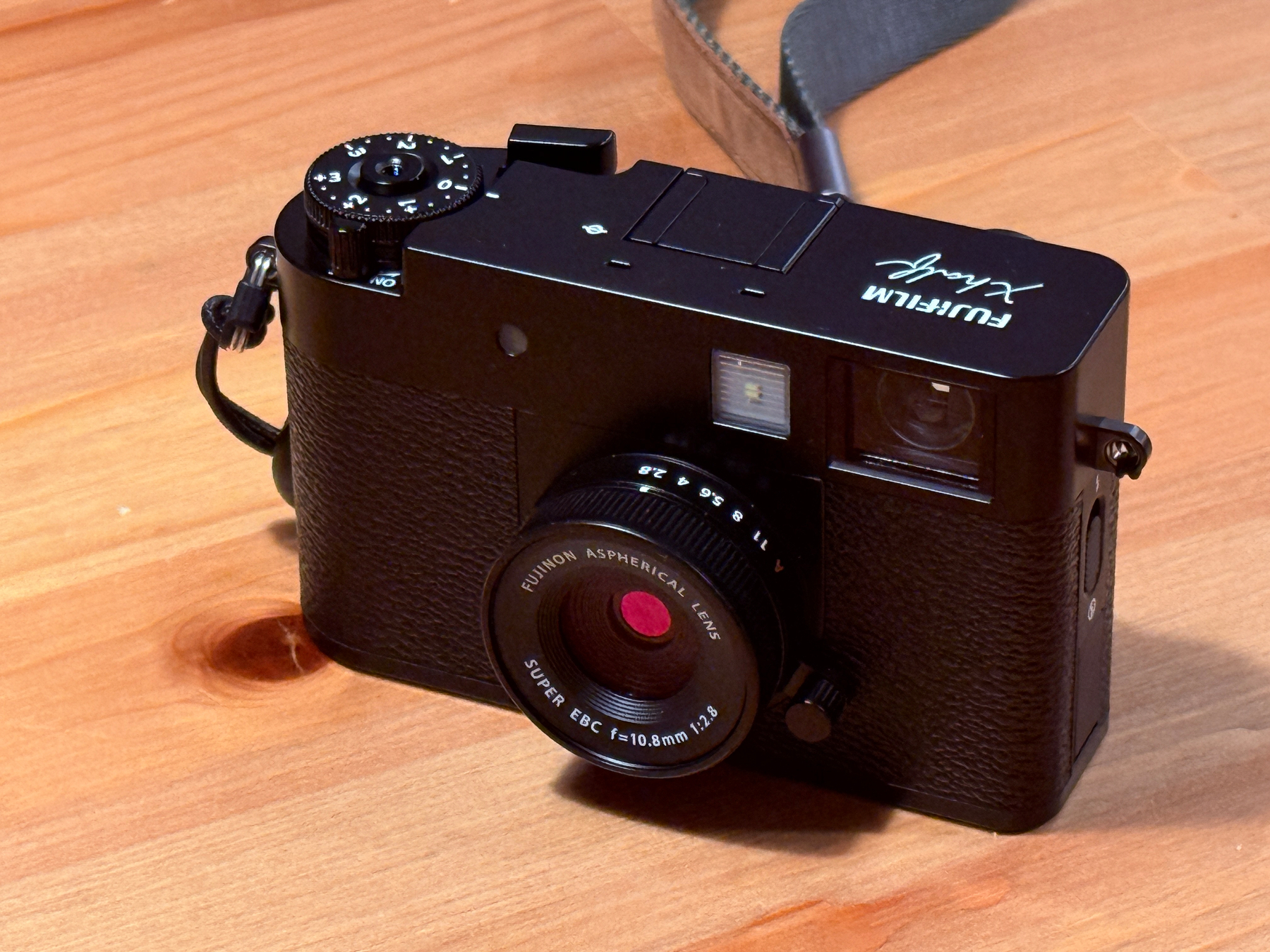
I got caught up on the (slightly dated) chatter about the Fujifilm X half and then decided to buy one. After a brief spin around the block, I think it is a keeper. The outrage it has generated is a little entertaining.
I have been buying stuff in the Instax ecosystem for years, including the assorted mechanical cameras, the digital hybrids, and a few of the printers.
On that side of the portfolio, they sort of nod over to the X series now and then, but stay grounded in the target demographic with big, colorful, rounded designs and simple supporting apps. They take a little advantage of the low expectations of their customers by introducing odd limitations with the digital hybrids, e.g. limiting obvious sharing options just to photos you have printed out of the camera (though if you decide to bother, you can always get them off the optional micro SD card, if you knew to install one in the first place).
I have a sweet tooth for toy and novelty cameras. There was a brief period in the early aughts where there were some genuinely fun designs, like one that was shaped like a thumb drive and came on a lanyard. I really loved the camera module on my Handspring Visor. For a brief period I had a shared photo album site set up I called “crapshoot,” and it was devoted to snapshots with bad early digital cameras.
I think because I learned photography as a supplemental skill to my small town reporting, I’ve always had a small inferiority complex about it. I learned how to do a very functional “will hold up well in a bad darkroom and newsprint environment” style. When I rediscovered how much I loved taking pictures, the thing I most loved about it was learning how to get into a particular frame of mind and treat photo outings more like a kind of walking meditation. So I went straight from “this is a task I do that involves a kind of simple craft” to “this relaxes me. I like what I see doing it.”
So I love taking pictures, but shy away from wanting or needing anyone to believe or think anything about what I’m producing. I make things that are to my taste. I like to have a supplement to my memories. Every now and then, when there’s an odd confluence of a story and me being around when it happens, I’m glad to capture it, but I am not really a street photographer in that sense, even if I sort of favor urban settings.
Toy cameras and bad cameras make it easier to always be taking pictures. They don’t attract a ton of attention, they don’t permit some kinds of rigor and control, and they do things/have artifacts that lower expectations – mine and everyone else’s.
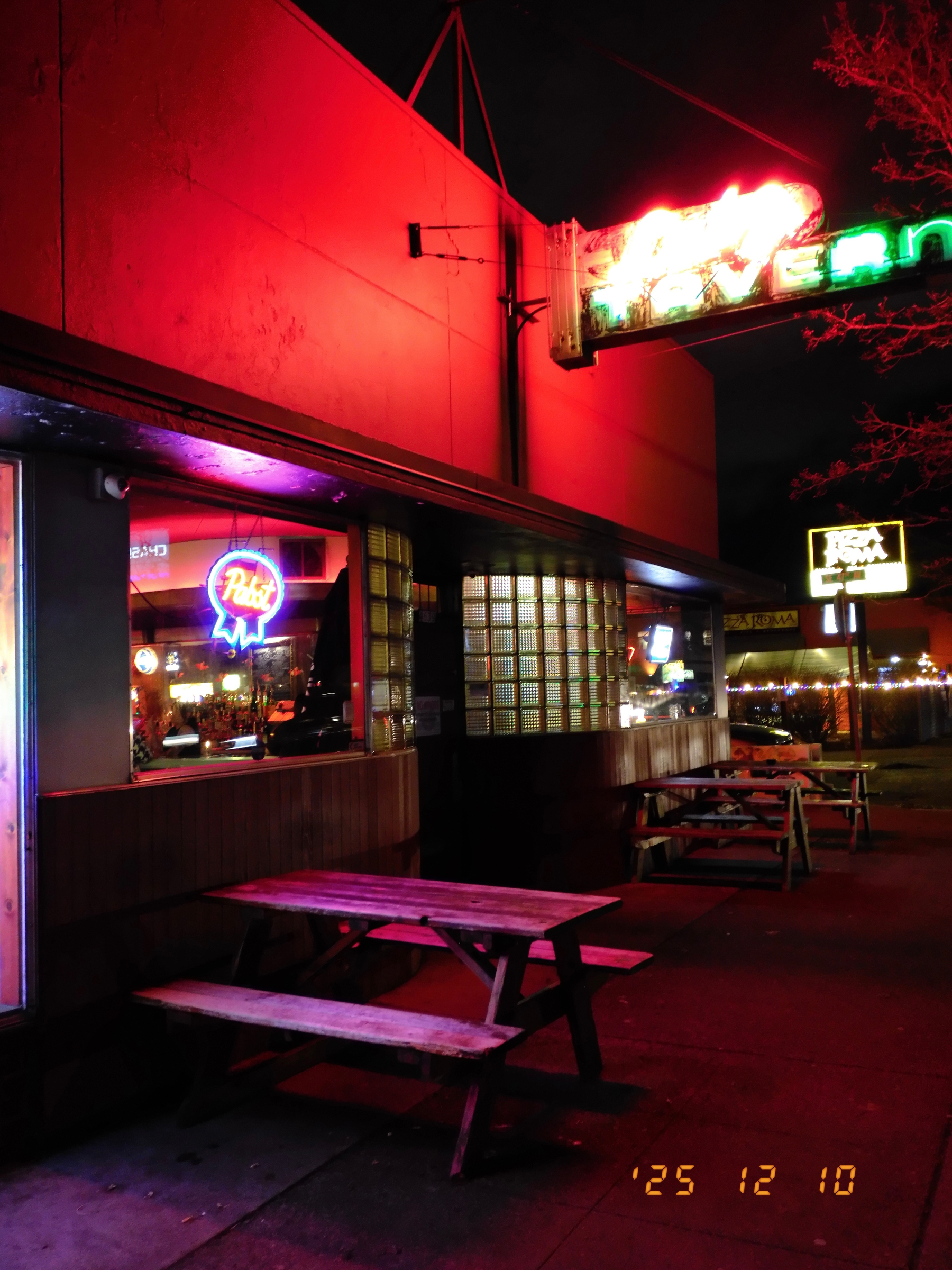
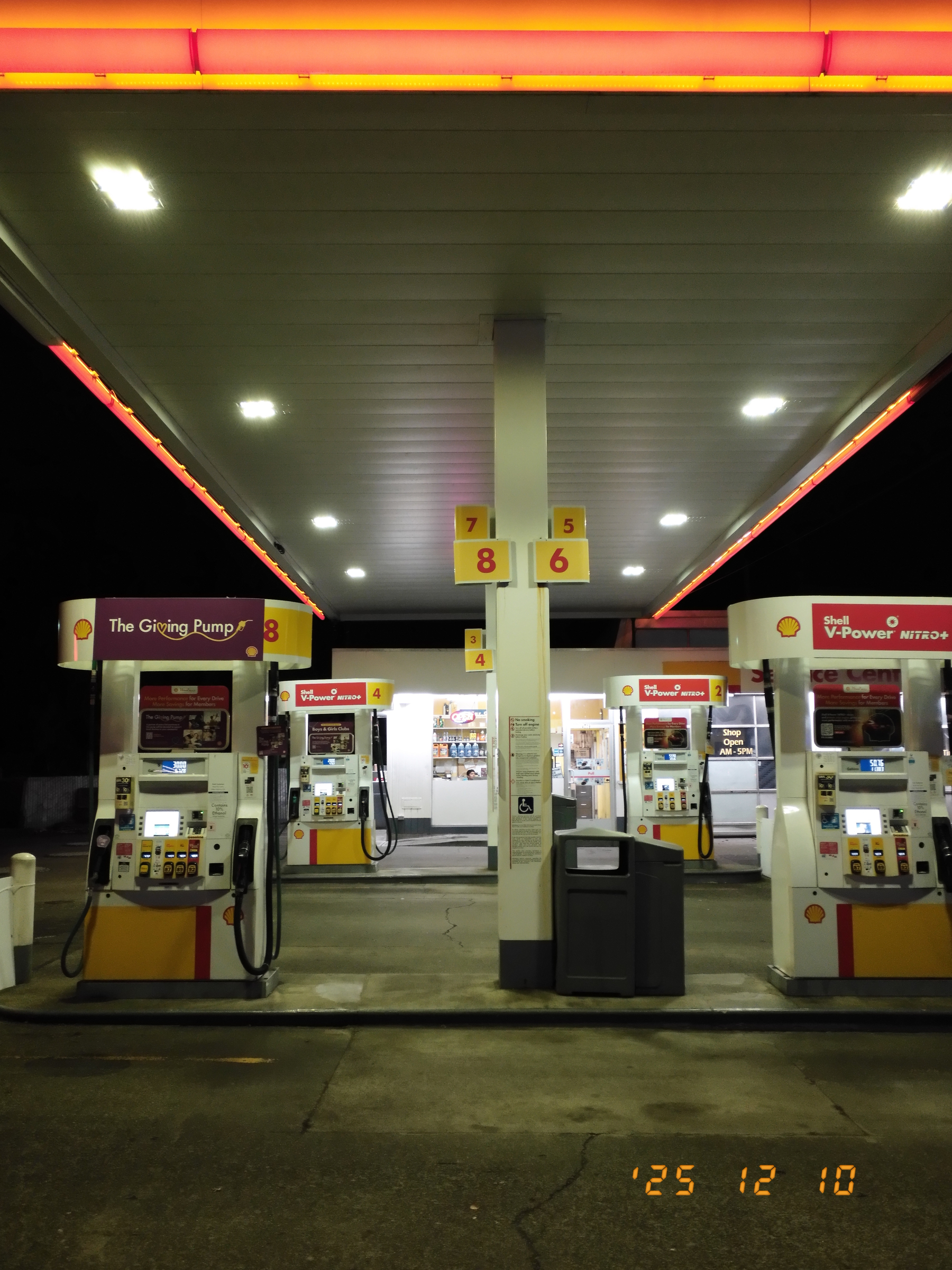
Back to the X half, I really like the small subreddit for it, because you can see an array of styles and approaches. The “light leak effect + digital timestamp” people fully lean into the bit, and those are the features that seem most outrageous to the people who hate the X half (and probably hated Instagram filters). One commenter explicitly called out the softness of the images from the small sensor as a mark in its favor.
Reading assorted fora and subreddits, I see a number of people who are considering switching to the X half as their main camera, or comparing it alongside Fujifilm’s lower end ILCs as a simpler, more approachable option. One person sold a bunch of gear, spent some of the proceeds on an X half and just pocketed the remainder.
So there are people who take the camera very seriously despite thorough documentation of its limitations. I can’t get myself there: I want to have a camera that is in the “nice” tier, and that means the specs will probably start at M43, weather sealing, and a lot of control. I’d be very unhappy with an X half as my sole camera.
At the same time, look at the wider context of being a person who likes to take pictures, and the hustle-ification of everything. I’ve sold a few prints to people who’ve asked for them because I use SmugMug to host and it’s dead simple to turn on the cart and do literally nothing to sell a print at cost. I auctioned a few off for MetaFilter a few years ago, too. But when people ask if I want to make the whole thing into a side hustle, I’m a little resistant: When I restarted my writing career in the late ’90s, it took a lot of the joy out of writing for me, and it took a few years after I was done doing it for a living to be able to write without feeling a certain dull resentment.
Where photography is concerned, I just packed up the last of a big lens and body sell-off. A lot of it was gear I acquired because I was curious about a certain style of photography I thought a given lens would benefit, or because a certain body had some feature that would get me this or that thing in the pictures I took.
I feel immensely relieved about being down to a single “real” body and a few lenses for the kind of photography I continue to do despite all the side quests. I have two other bodies and two lenses: One’s my Fujifilm X-Pro3, which I feel very attached to. I kept my 23mm and 35mm Fujicrons to go with it. I am not sure it’s forever, but I didn’t like the thought of parting with it. The other body is my old X-T2. I don’t shoot with it anymore, but I have a sentimental reason to hold on to it. Some part of me wants to keep a foot partially in that world, and I’m just going with that.
But again, back to the X half, which is also in the collection now: I think I understand why someone would consider it as a main camera, because it’s a low-pressure device. There’s only so much it can do for you, and only so many choices you can make with it outside the act of simply shooting with it. I’ll spoil my first impressions by also saying that people have called it “plasticky” but it has enough heft and solidity that it feels “real.”
First impressions
Taking it out tonight to put a few dozen shots through it before I met Al for dinner, I noticed a few things:
It really is very small. Easily jacket pocketable. Close to “pack of largish playing cards” size. People keep posing it alongside an X100 and it is hard to explain, but when you take a picture of them next to each other, it somehow doesn’t convey how small this thing looks and feels in real life.
It feels very solid. Dense. There’s a sense of weight to it.
People complain about not being able to see the little indicator LED to the left of the viewfinder. I was able to. By default the camera is set to center focus, and I could tell when it had lock when I composed through the viewfinder.
Where autofocus is concerned, since it does center focus out of the box and offers no AF feedback through the OVF (besides the green lock light to the side), you can just sort of treat that as liberating and do the old “focus and recompose” thing with it. I once read an extensive treatise with pixel-peeping proof of why that is bad, and it was early enough in my time with autofocusing digital cameras that I sort of internalized “compose, move the focus point; don’t focus and recompose.”
Once I realized that the half would utterly thwart any focus perfectionism, I just muttered a cheerful “well, fuck it” to myself and got on with focusing and recomposing.
(On reflection, this was a problem I had with the Ricoh GR IIIx. I had a little OVF that went in the hotshoe, but didn’t have center AF set up. It was annoying. And stubbornly dense on my part. Because I had way too many cameras, it was easy to just set the Ricoh aside and not try to work with it. If all my gear disappeared tomorrow and I woke up to a GRIII on the kitchen table, I’d re-order the OVF, set it to center focus, and use that for all my street photography. I’d bother with EVF and focus point setting for, like, portraits or things where nailing focus really matters. Not for “f8 and be there” sorts of deals.
I was a little leery about the fact that it is all touch/slide control. It’s perfectly responsive. Much better than the old XF-10. The screen(s) are readable despite being so small. Enough to compose with and quickly review. You can pinch/spread to zoom in and out of an image.
There’s very little to control. You have a grain setting, an exposure control knob, an aperture ring, a simple Auto ISO function, a few autofocus modes, and face detection. There are no tone or saturation settings. You can manage white balance. You get a bunch of film simulations and a bunch of special effects. I think the color may be goosed a little but I can’t be sure.
I think there’s enough there to make nice jpegs. Not enough to go into a super deep rabbit hole.
I haven’t yet done a “roll” of film in the film mode.
The app pairs with the camera pretty reliably. Downloading pictures from camera to phone is as slow here as it is ever with any app/camera combo, so that’s what a USB-C SD card adapter is for. I did a firmware update with the app when I got it home and it was painless.
Now what?
Well, I have this thing. It was $200 off, which made it pretty hard to ignore. I am not going to return it. I don’t even have a twinge of remorse. I sold off so much gear that this was a small percentage of the proceeds, and it truly is what I wanted the Instax hybrids to do, meeting me on the X series side of the product line while being simple and fun. So, Fujifilm granted me my wish and I’m gonna go with it.
I don’t imagine it to be a travel camera, exactly. That’s the OM-3. But it’s a fine downtown camera, a running errands camera, karaoke night camera, etc. etc. Too small to not just bring along where I might balk with the OM-3. Just toss it in a sling or stuff it in a pocket and know I won’t have to suffer the indignity of taking pictures with my phone. Seems okay.